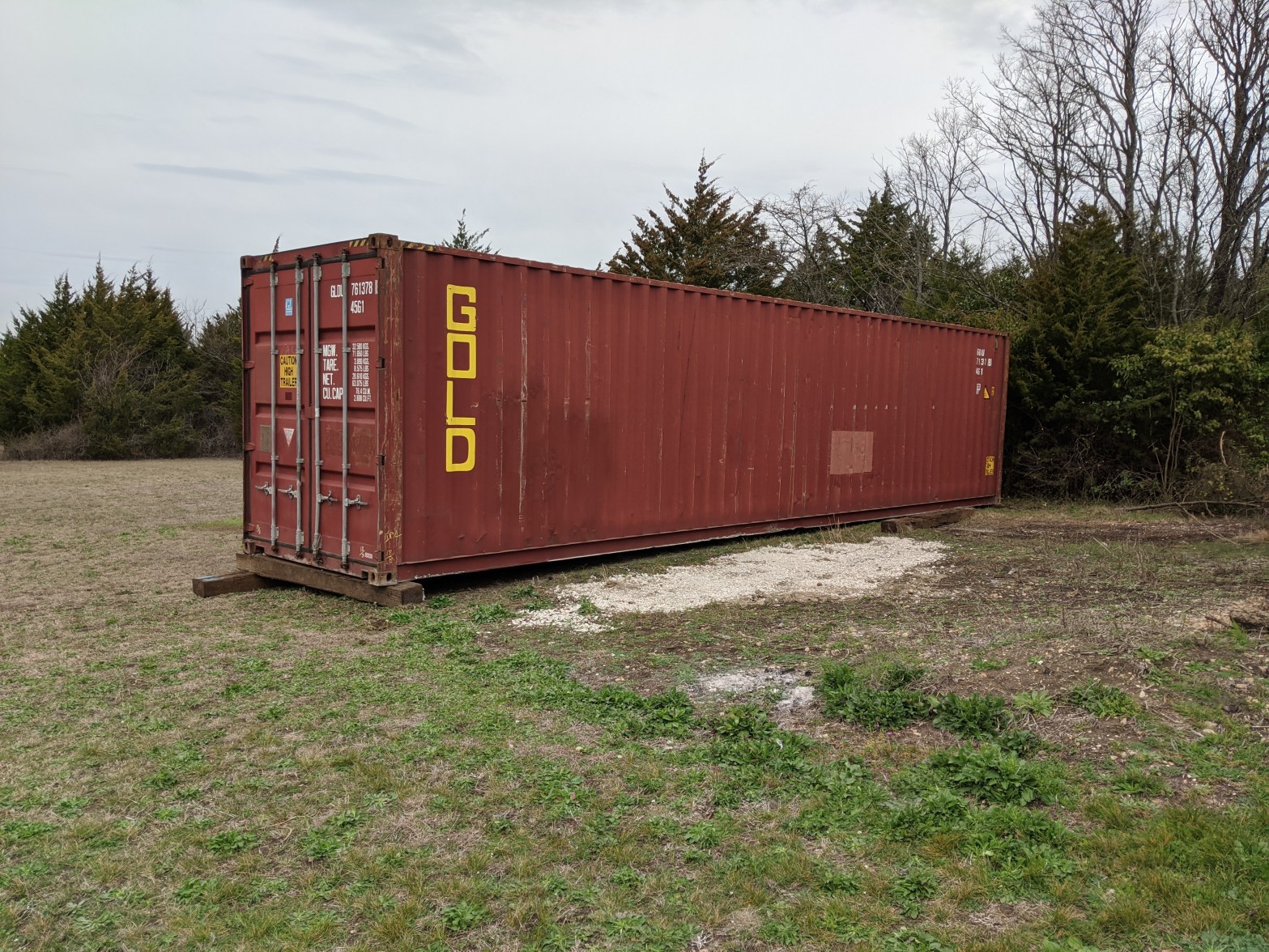
It’s not the worst idea I’ve ever heard, building your home from a shipping container, but it’s certainly not the norm. Or is it? Some companies, like ContainerHomes.net (containerhomes.net/) and Honomobo (honomobo.com) in Canada, are using shipping containers as the “bones” for building modular, easily shipable, prefabricated homes. After all, they fit on existing trailers and are only as wide as the semi truck trailer is normally. But more and more, have you noticed companies are striking out in new ways to build tiny homes, modular homes, minimalist layouts, all with the same construction techniques they already know? Reinventing the shipping container’s “bones” instead of starting with a container in the first place. Aesthetically speaking, shipping containers as a family home leaves a lot to be desired. But what they lack in looks they more than make up for in functionality. So how can we take advantage of all the Pros and minimize, or make livable, the Cons? Only time and lots of testing will tell.
When it comes to choices for building a home, or any structure for that matter, your options are limited to just a few. “Stick-built”, often called traditional construction, which includes using metal “sticks” or metal studs instead of wood lumber 2-by-4’s. In both cases you usually line and fill the cavities with insulation, not before running your electrical, your plumbing, and whatever else you don’t want exposed in the rooms. But once those things are installed they’re there for the duration of the home’s life. Then there’s your modular, or prefabricated, wall panel construction. Which is just stick-built, but somewhere else, and then assembled onsite. Think they use the same little Allen wrenches from Ikea to connect the walls? Never mind. Let’s not forget the castle or fortress builders. Concrete walls, usually poured in some sort of framework and/or insulation to make the “walls” more like walls. You ever visit relatives up north and check out their basement? Bare concrete walls that sweat at different times of the year. And the most interesting smell that can only be described as “dank”. Forget about trying to hang a picture in a concrete walled basement that hasn’t also been lined with studs and drywall. Then there’s your log cabin. Yes, people still build with logs, although that method has also been modernized somewhat as well to minimize materials, time, and waste and maximize fit and function.
They all have their Pros and Cons, including shipping containers, as you’ll see below. But when I look at what most companies, independent contractors, and architects are doing with them all I see is the same old methods being applied because that’s all they know. For example, one architect in Arizona took a perfectly strong shipping container and lined the interior with wood studs and drywall because “that’s what the code required”. Let me make sure you get this picture. He took an already narrow, 8-foot wide box that can sustain being stacked 9 containers high, because the walls are so strong, and he installed complete interior walls made of 2-by-4 studs and drywall approximately 4″ deep on either side plus 2-by-8 headers above the sliding glass doors for added strength. Okay, okay, I could see welding in vertical 2″ square tubing on either side of a really wide patio or accordion doors frame to minimize pressure on the doors, but studs throughout?!? He just took his 8 foot wide structure and narrowed it an additional 8 inches. At least the general contractor in Florida was smart enough to put the wood studs in sideways to minimize the depth of his walls. Although again, he was also just falling back on what he already knew for a solution that for all intents and purposes was probably unnecessary.
Solution? If There is One
Maybe let’s lose the sticks, People! At least the wasteful or redundant use of them. And throw away what you already know about construction and look for fresh solutions that utilize the existing strengths of shipping container materials and their structures. Over the coming months I hope to uncover some new data, new methods, and maybe reinvent new ways of using old techniques to shipping container builds that don’t supersede its pros because that’s “all we know”.
Pros
- Modular – Multiple containers can be “stitched” together for more square footage
- Scalable – If designed properly, adding more containers could be as seamless as “bolting” on the module(s) you need next, as you family, budget, or needs grow.
- High-Cube models (9.5’) make for vaulted ceilings making it seem less claustrophobic
- Made of solid metal – Maybe there’s a way to take advantage of this CorTen Steel construction
- Structurally Rigid – Does not require, or requires minimal, typical stick-built structural elements to meet code
- Resistant to Corrosion (NOT Corrosion Proof)
- Almost Perfectly Water Proof and Air Tight (save two small 9-hole plastic covered vents)
- Plywood floors have thick, bug and rodent resistant tar-like sealant underneath
- One-Trippers are usually safe from contaminants and have no damage, dents, rust, or repair patches
Cons
- Very Narrow
- Limited square footage – 320 sq ft in the typical long version (40’ x 8’)
- No insulation
- Adding walls and insulation take away from the already limited footprint
- Plywood floors may contain contaminants from prior shipments
Stay Tuned
Stay Tuned for more Pros and Cons, as we discover them, and all the previously mentioned TESTING and PLANNING that we’ll be doing along the way.
 Thales of Miletus