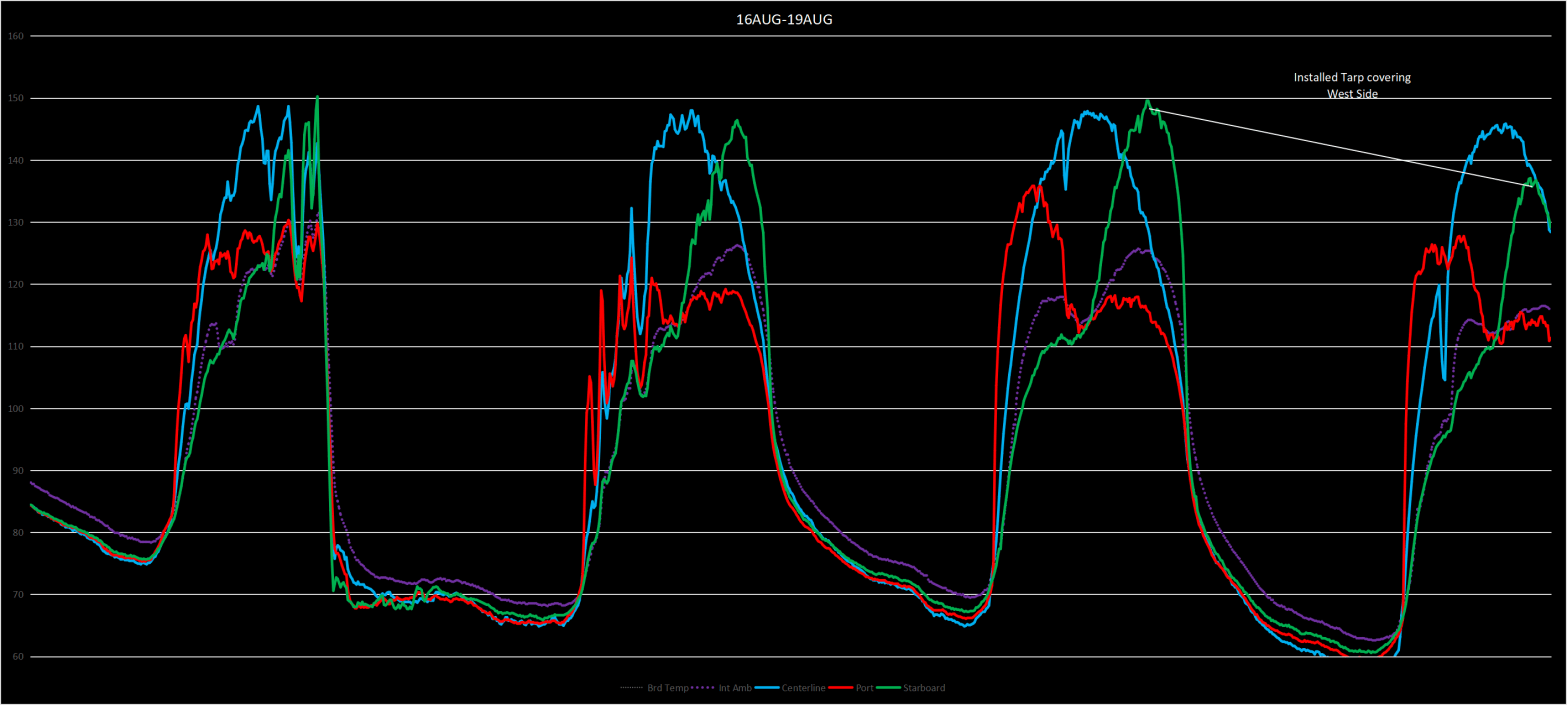
As I mentioned when we left off last week our starboard side, or West side, of the container gets the full strength of the setting sun after a half day of already heating up the metal on the East side and roof. The internal Ambient temperature chart lines look like a turbo boost spike once the West side wall starts getting the sun.
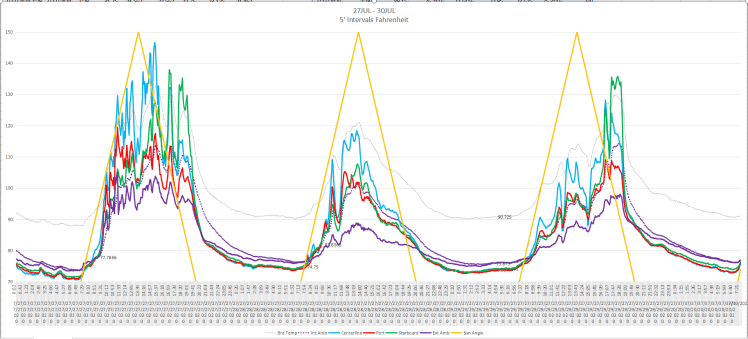
If you look closer on the July 30th data you’ll see that the West wall sensor (solid green line) heats up even before the sun is directly beating on it. This day isn’t the best example as there was a dip right after mid-day that caused all three red, blue, and green lines to dip probably because of clouds. But the blue line makes a quick rebound and the green AND red lines follow suit. This makes me suspicious that some of the pre-heating is via conduction of heat from the roof. The East pre-heats the roof and the roof pre-heats the West. And the roof is still able to send some heat back to the East side even though it has been in the shade now for over 3 hours. But how can we be sure?
Time to Run an Experiment
Time for some shading. Because I wanted to tackle the conduction theory first I decided to go for a roof covering. Then if the numbers warranted it I could add or remove tarps from the sides, roof, wherever, collecting data along the way. Sadly, like most experiments, the first attempt was a failure. 😦 But in the end, it was a good thing, because we’d started with the wrong section first.
After procrastinating for over a week, on 8/16, I finally zip-tied two 16’x12′ tarps together and gorilla taped the edges down the sides of the container.
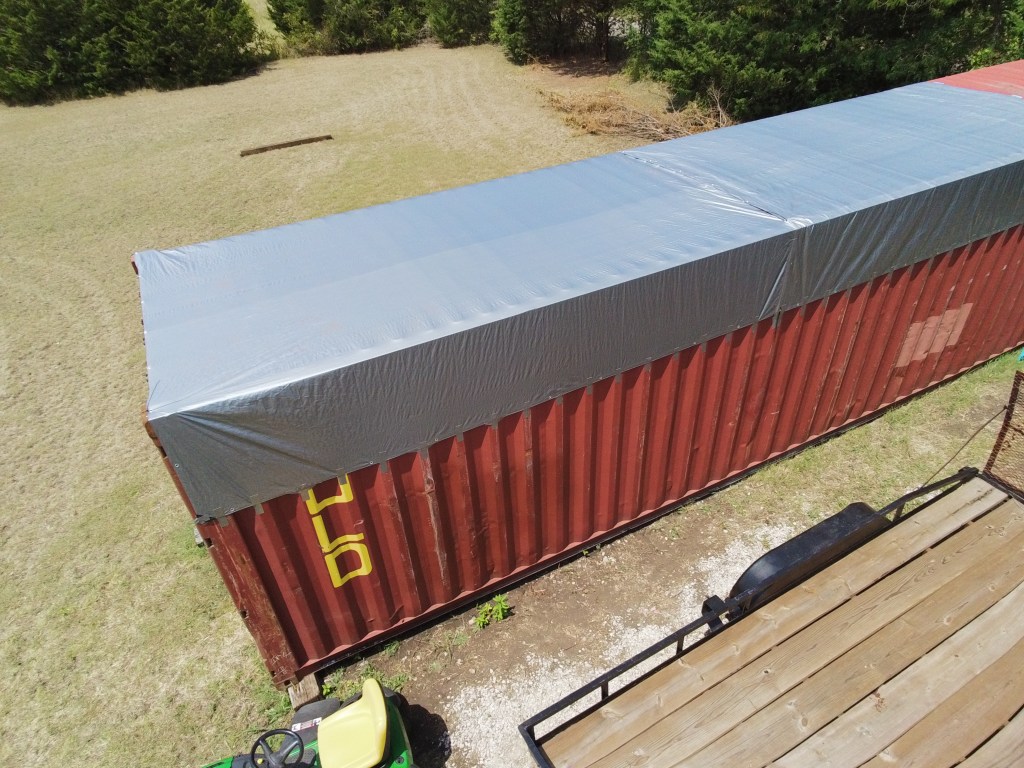
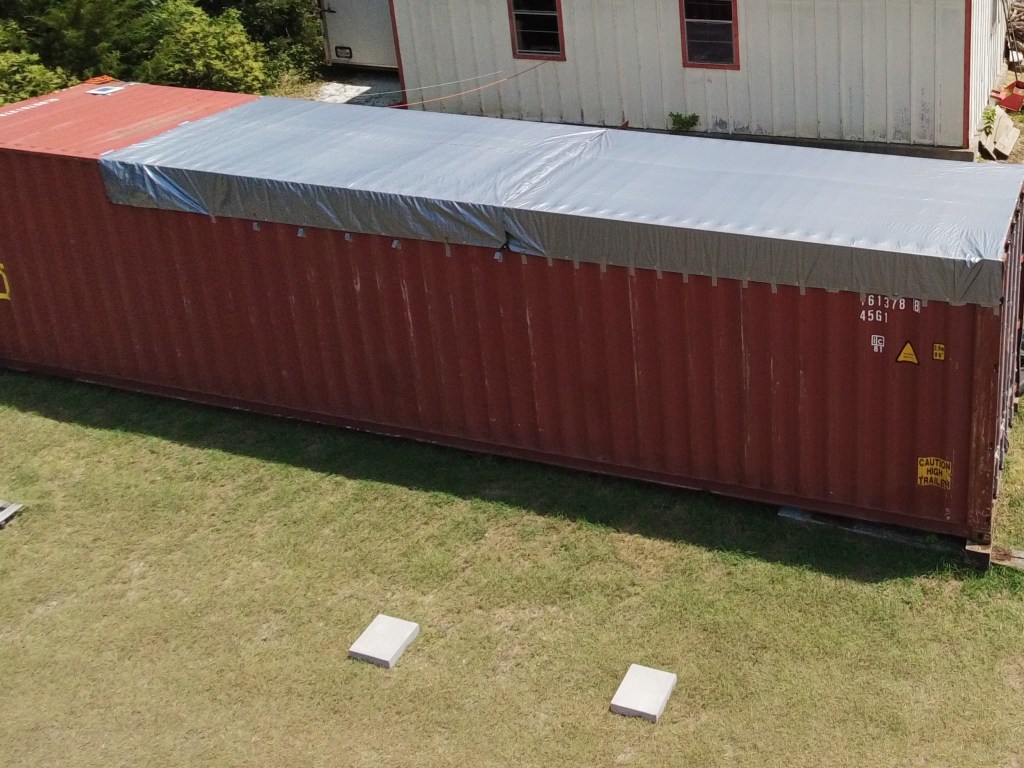
In the late afternoon thunderstorms with heavy rain and gusts up to 50mph came through. It was so disheartening I didn’t even want to take a picture of the aftermath. I just pulled everything down and stored them away to be used on Plan B, once I figured out what that was. All was not a loss though. I did watch how the tarp was pulled off the container, despite gorilla tape every two feet. There was no give to tarp. Everything was so tight that when a wind gust came through it would jerk the tarp out and upward violently. Any future solution would need something that can give or move a little and return to its original position. Bungees maybe?
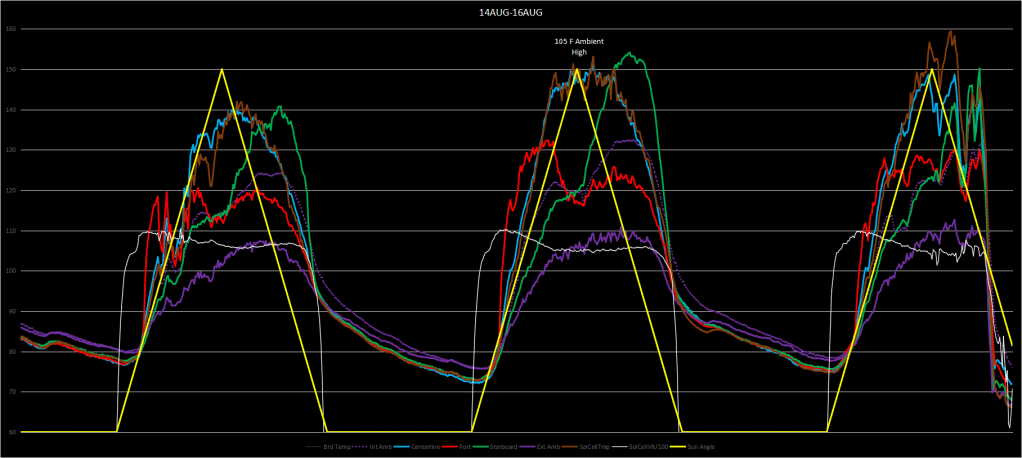
But good data was acquired. If you look closely on 8/16’s graph lines on the far right you can see that unlike the day before, the roof (light blue) didn’t get as hot as the solar cell sensor. 8/15’s blue and brown lines both reached 150F as opposed to just under 150F for the roof vs almost 160F for the solar cell on the 16th. Both days saw ambient (solid purple) temperatures above 105F with the 16th being around 110F.
Then as you can see by the lines in the afternoon, the floor fell out on all sensor temperatures as well as sunlight on the solar cell. That’s when the storm came through.
The other lesson learned was the roof was not the answer. Not a big part of it anyway. We need to chip away at the big pieces before sweating the small stuff. Even before the tarps blew off it was apparent that the Starboard (West) side of the container (solid Green line) is where we must start first.
Operation Tarp 2.0
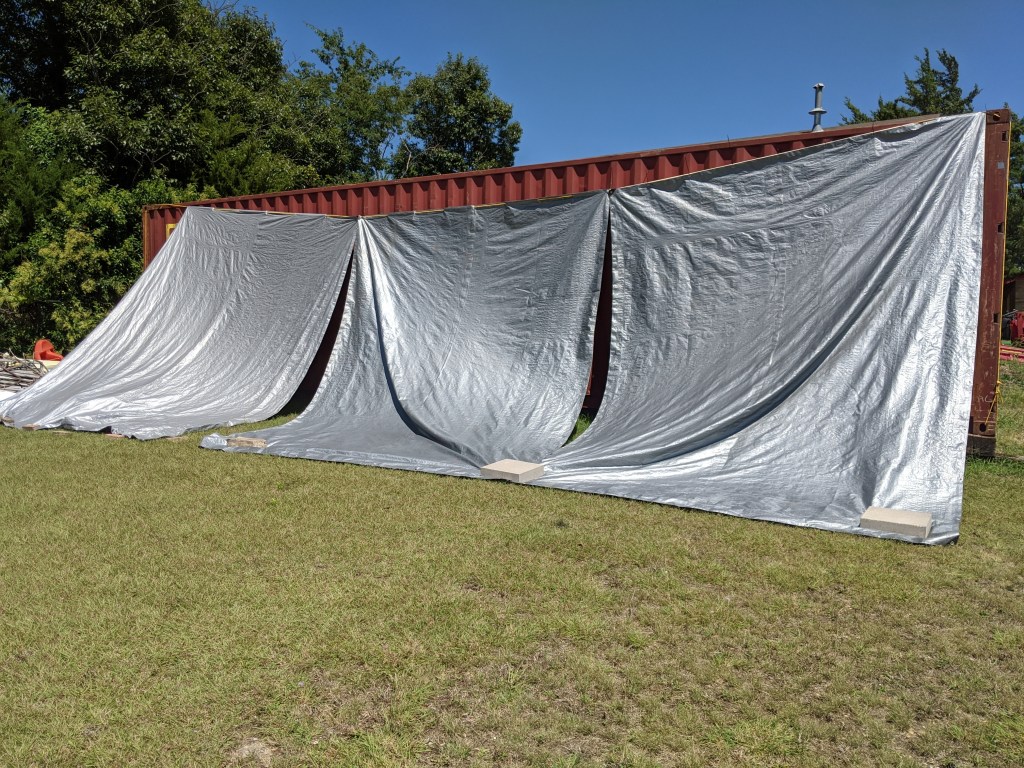
On 8/19 I decided to zip-tie three 12’x16′ tarps to 1/2″ PVC pipe suspended by a rope that I ran through the container corner fittings. This would allow for a solution I could build on the ground and then raise and lower as needed. Especially if a storm was coming. 😉
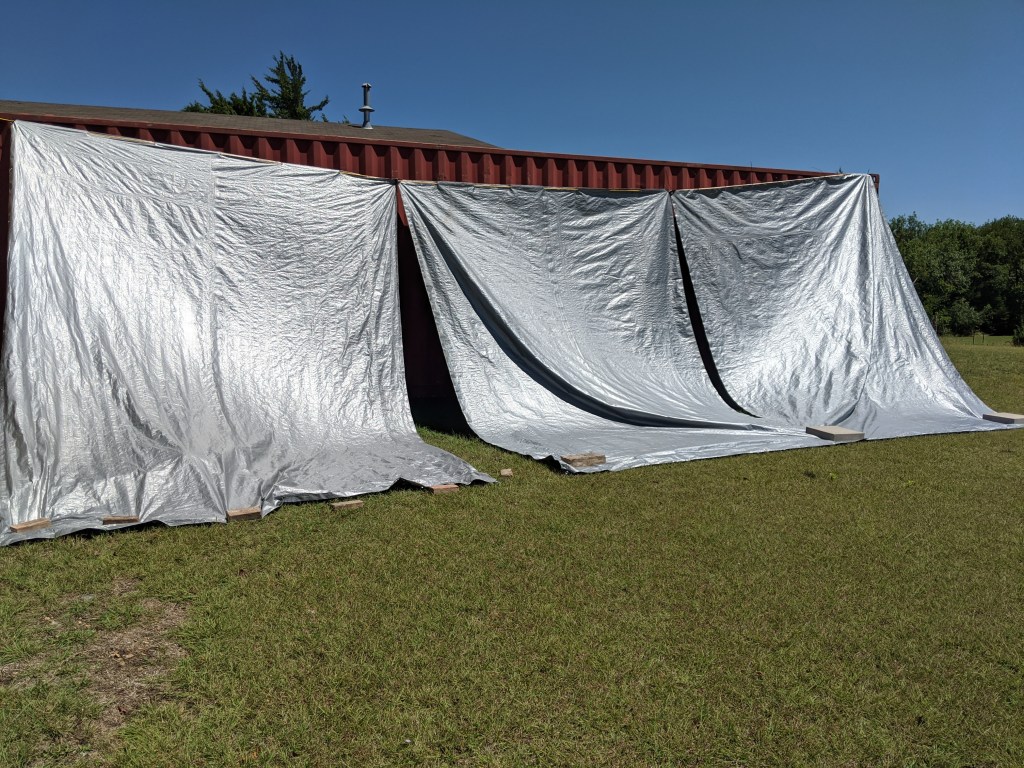
Despite the gaps between tarps, the results were immediate. By mid afternoon when the sun was beating down on the west side I tested the metal with the cheapest sensor I had on hand…my hand. On the slightly exposed southwest and northwest corners of the container, where the metal was not in the shade, I could only touch the side for a fraction of a second. Step underneath the tarp just two feet and I could lean against it for minutes if I’d wanted to. Finally! Progress. And it showed in the chart data as well.
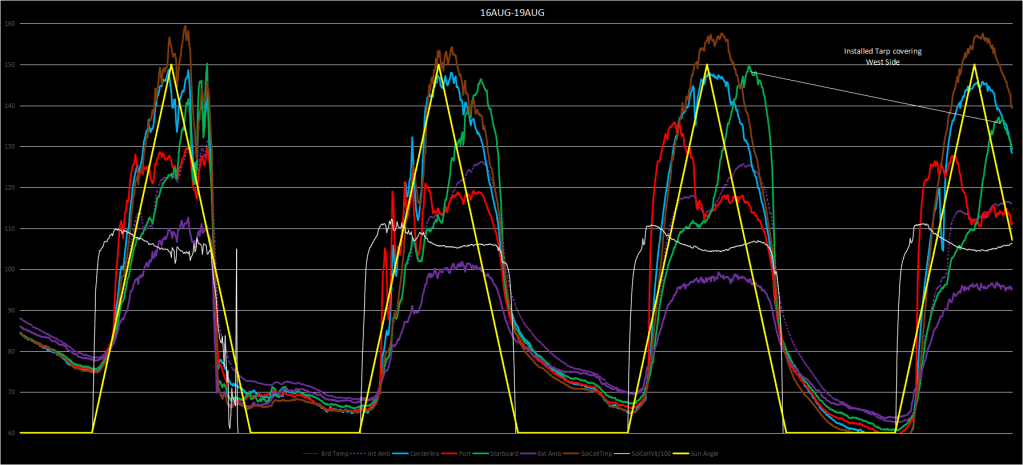
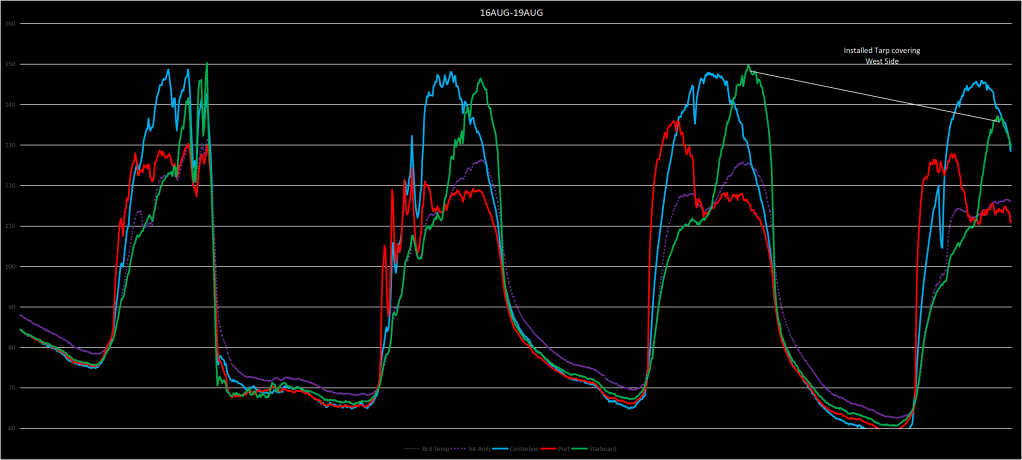
8/19’s afternoon was almost identical to 8/18 in all respects. The only difference between the two days was a few morning clouds on the 19th, but by the afternoon the East and roof temperatures were about the same. The west side was now showing a good 15 degrees cooler than the day before.
Shading (and air flow) are definitely part of any future solution going forward.
See y’all next week!
 Thales of Miletus