But First, Let’s Sum up August
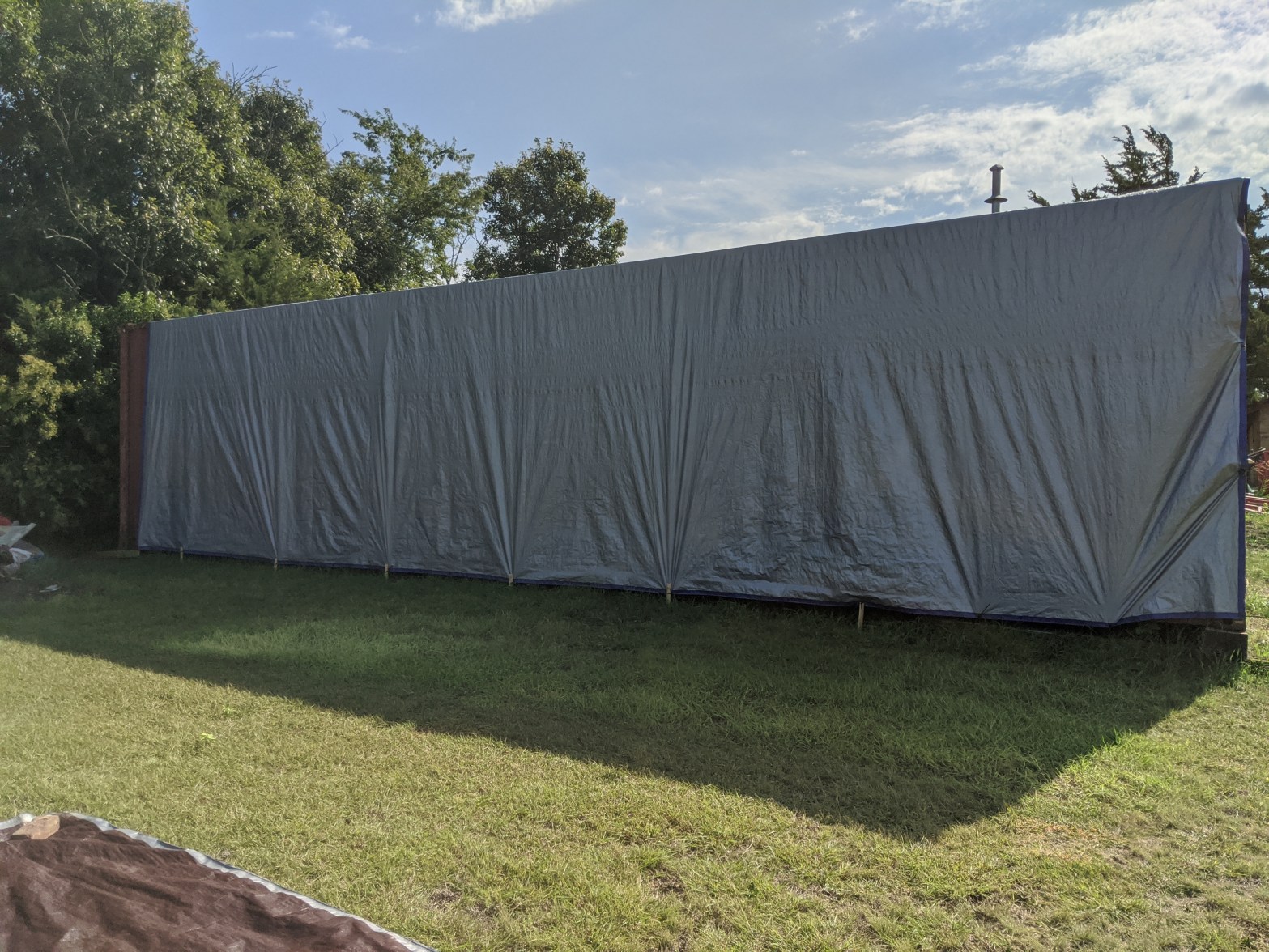
By the end of August it became obvious that the best tarp shading solution would require something that covered the West side completely and the top and East side as well. Since the bad weather fiasco that ripped apart my rigid tie down and tape down solution I’d also learned that a flexible tie down system would be necessary to roll with the gusts while allowing a breeze to assist in cooling under a shaded area. Not too loose. Not too tight.
Here’s what we came up with.
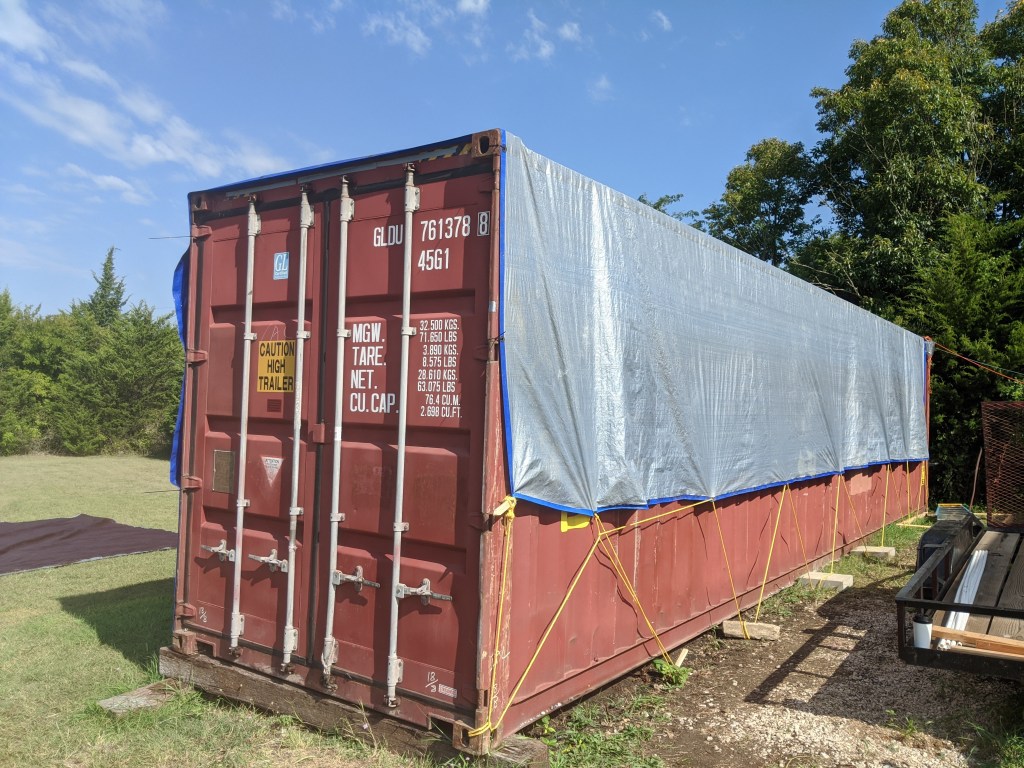
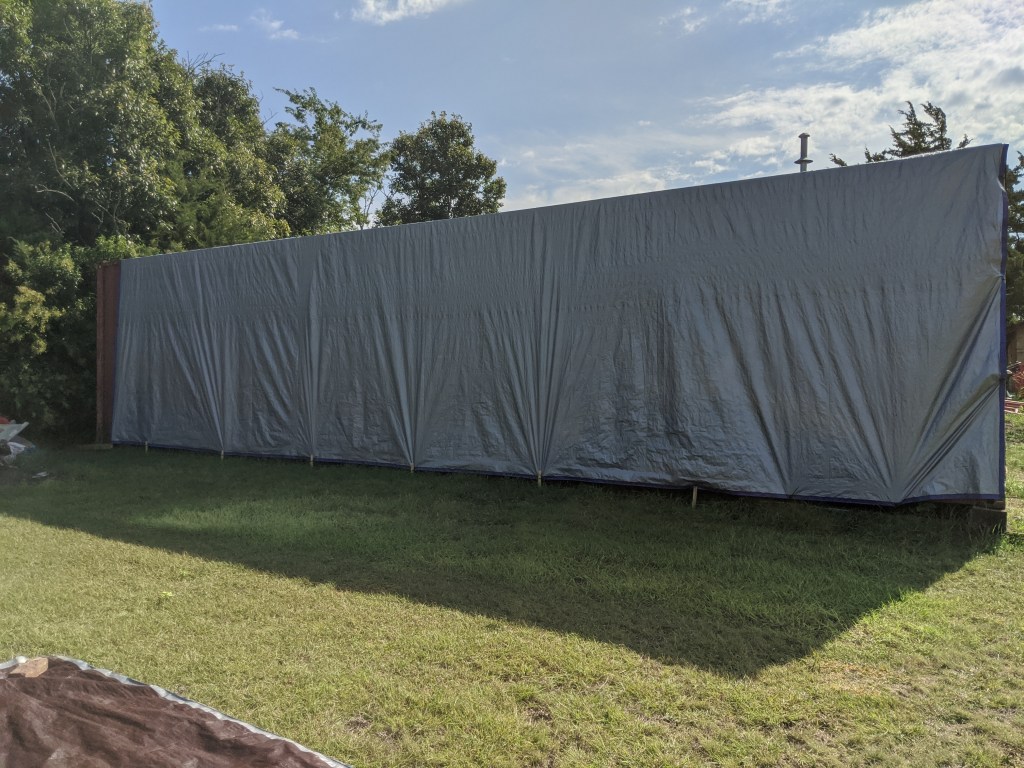
Later on we found that bungees anchored to concrete blocks were even more flexible as really big gusts could pull those stakes right out of the ground. With bungees on both sides we only had to reposition the concrete blocks a little after any storms.
As for temperatures, things got better there too. Even with 102 degree direct sunlight the roof (red line) stayed at or around 120 degrees. A 20 degree improvement.

The Next Project in Parallel
Starting in September things got a lot busier with my time. Between work and the next project that will run in parallel with the temperature monitoring project, my schedule kept blog editing to a minimum. So, baring any news warranting a blog post all for itself, we moved to updating this journal monthly.
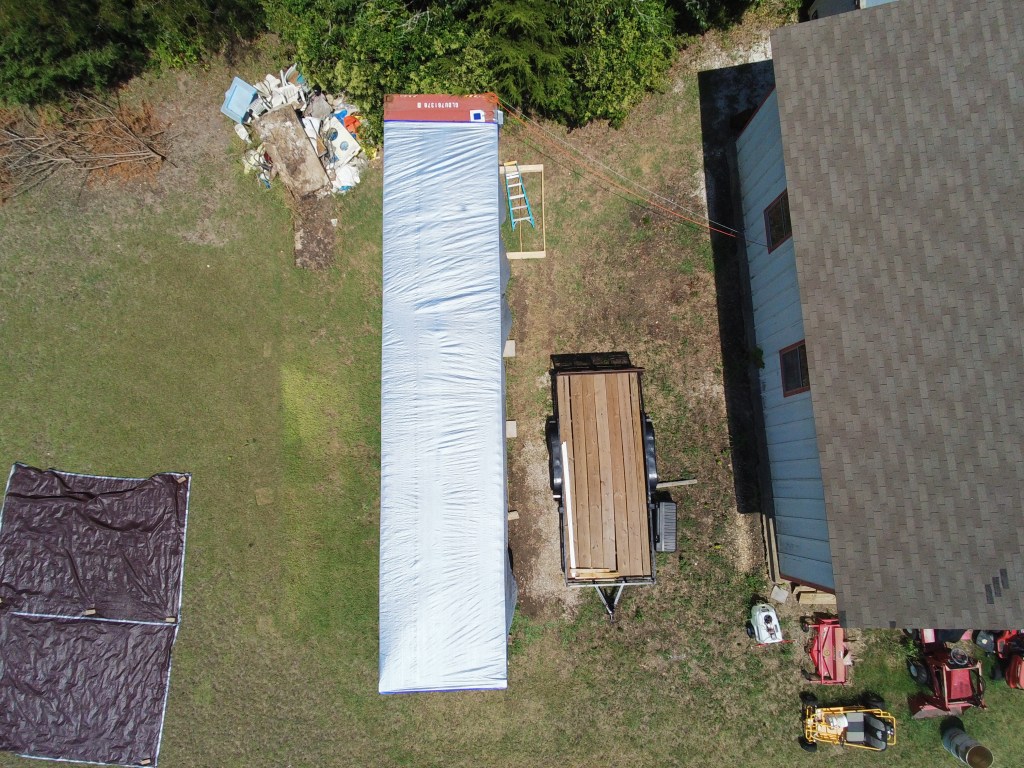
In the West Side blog article a couple weeks ago, if you were paying close attention, you may have noticed two concrete blocks and a railroad tie in the pasture to the West of the red storage shipping container.
Welcome Another Container
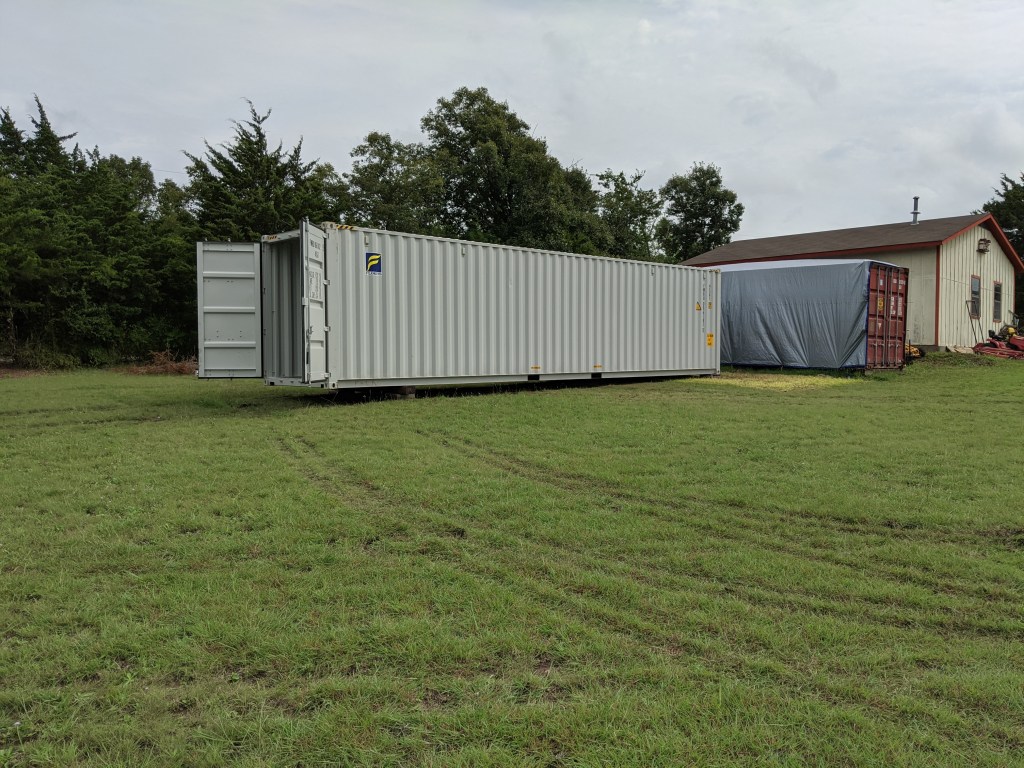
After months of planning, budgeting, designing and a lot of engineering we decided to bite the bullet and purchase the first container of what will become the phase one prototype for our approach to off-grid living. Using re-usable and recyclable resources this approach promises a DIY solution that is both modular and energy efficient. But most importantly, economical.
If it can’t be done “pay-as-you-go”, it’s not a solution for the masses. So, be prepared to see many solutions that at a DIY’er can choose from depending on THEIR personal financial situation. Like Elon says, and I’m paraphrasing here, if someone wants to purchase an EV, they should have the option of getting one that’s just as inexpensive as an ICE compact or sub-compact on the market today. Which is why they’re probably investing a lot in what many are calling the (future) “Model 2”. A 2-door, 200+ mile range EV that’s as safe as a Model 3 but even cheaper to buy and maintain.
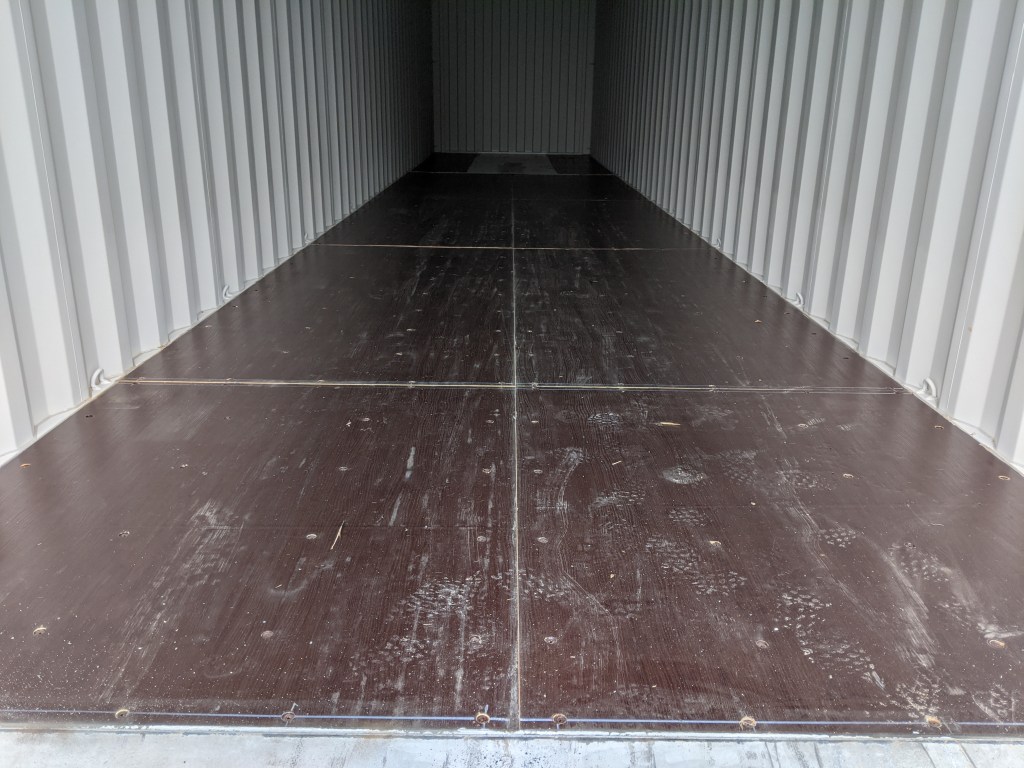
With a pristine floor and only a couple of very minor dings this container is the perfect canvas to begin work on what we hope will be a brand new way of building off-grid with shipping containers.
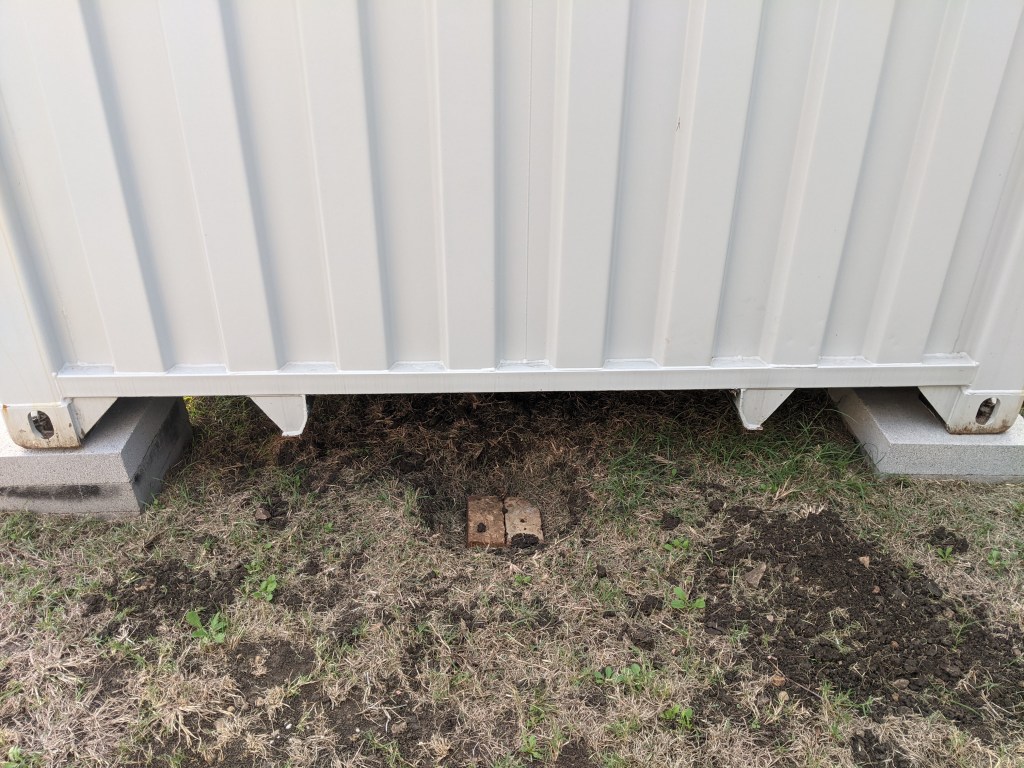
Leveling is the first battle to contend with. If it’s not level-able, even after settling over time, then we can’t be accurate with cuts and installations. I had to dig a hole under the non-door (East) end with some bricks in the bottom of it to raise the container using a 8-ton bottle jack. Three on the left and two on the right, semi submerged was enough to get things level fore and after as well as port and starboard. Yes, we’re using nautical terms still, with the “head” of the ship being the doors end.
Our Approach
Sure, many people have built tiny homes using shipping containers, but they always (IMHO) fall back to what they already know about conventional construction techniques.
Like installing 2×4 studs throughout. WHY!?! It already has ALL the structure it needs without the additional and space wasting inclusion of studs.
Or like those companies that gut the container in its entirety sometimes removing an entire wall, which weakens the structural integrity, only to have to add even more steel supports everywhere to fix what they broke. WHY?!? Why weld three containers together and remove ALL of the inner walls only to find you need to reinforce the crap out of what you just gutted? Better to have just started with a pole barn or standard metal building shell instead.
No. Our approach is modular, which means you can add on without a major renovation. Expand out or up, the option will always be there.
Our approach is simple, which means most DIY’ers can do it themselves or hire out very cheaply for those skills they don’t already have.
Our approach is intrinsic. Which means we will utilize as much of its EXISTING capabilities and value without the need for additional expensive reinforcement or materials. It ALSO means we will utilize the intrinsic capabilities of having a steel structure in the first place. More on that to come, but suffice it to say, having a metal structure has some REALLY great advantages when it comes to cooling, heating, and protecting important components, and its occupants, from dangers that haunt most conventional builders of “stick-built” homes.
See you Next Month!
 Thales of Miletus